2026-11-29 ·
How to Protect Your Deck from Fairfax County Winter Freeze-Thaw Cycles
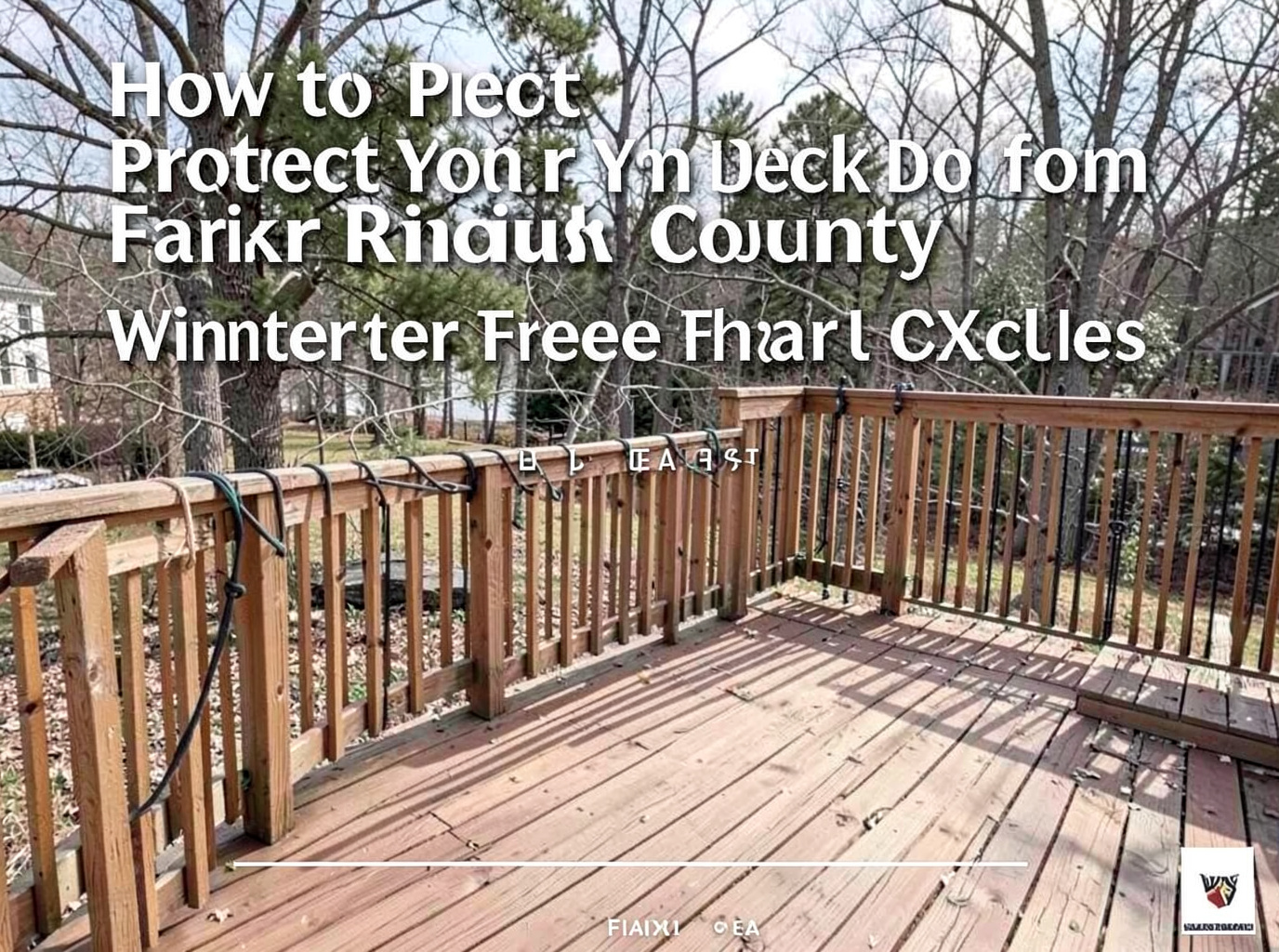
Applying a penetrating sealer every 2–3 years and clearing debris from ledger boards before temperatures drop below freezing gives decks in Fairfax County the best defense against repeated freeze-thaw cycles. The region’s humid subtropical climate produces 20–30 freeze-thaw events most winters, with daytime thaws followed by overnight drops that force water deeper into cracks. Homeowners in Downtown Fairfax, Fairfax Circle, and Old Town Fairfax see the same pattern on decks attached to 1970s–1990s split-levels and colonials where ground moisture stays high year-round.
How Freeze-Thaw Cycles Affect Decks in Fairfax City
Water enters small gaps around fasteners and between boards during the day, then expands when it freezes at night. In Fairfax City neighborhoods near the Fairfax County Courthouse and George Mason University, decks built on clay-heavy soils hold extra moisture that prolongs the cycle. This repeated expansion lifts rail posts, splits joists, and pushes composite boards out of alignment. Decks in nearby Fairfax Station and Vienna experience the same stress because the terrain slopes gently toward streams that keep subsoil damp even in January. Checking for soft spots in October before the first hard freeze prevents small issues from becoming full board replacements by April.
Choosing Materials That Resist Local Winter Stress
Pressure-treated southern yellow pine remains common in Annandale and Burke because it accepts sealer well, yet it still needs protection on the end grain where water collects. Composite options perform better when the product has a dense cap that limits absorption during the 40–50 percent humidity common in late fall. The article Choosing Deck Materials That Handle Northern Virginia Humidity explains how color and core density influence expansion rates during temperature swings. Wood decks in the Fairfax Historic District often use cedar or redwood, which require more frequent attention to end cuts and fastener holes to avoid delamination after repeated thaws.
Sealing and Drainage Steps Before Winter
Clean the surface with a deck-brightening solution, then apply two coats of a water-repellent preservative rated for below-freezing application. Pay special attention to the ledger board against the house and any joist hangers where water pools. Slope the deck surface 1/8 inch per foot away from the structure so meltwater runs off instead of sitting. Homeowners in Old Town Fairfax often add a drip edge along the front rim joist to keep water from wicking back under the boards. These steps reduce the amount of water available to freeze and expand inside the structure.
Annual Inspection Points Specific to Northern Virginia
Walk the deck in late October and again after the first thaw in March. Look for raised nail heads, gaps wider than 1/4 inch between boards, and soft spots along the perimeter. Check that rail posts remain tight to the rim joist; movement here often starts during the first freeze-thaw cycle of the season. In Springfield and Herndon, decks near wooded lots collect more leaves that trap moisture against the surface, so clearing debris becomes part of the winter routine. Addressing these items early avoids the need for deck repair once spring arrives.
When to Schedule Professional Maintenance
If more than 10 percent of boards show cupping or end splits after two winters, plan for targeted board replacement rather than full deck replacement. Reapply sealer on wood decks every 24–36 months depending on sun exposure and foot traffic. For composite surfaces, a mild cleaner followed by a compatible protectant maintains the cap layer through Fairfax County’s humid summers and cold winters. These intervals keep the deck stable without unnecessary work.